
Sumpter Valley Dredge State Heritage Area
4.7Google rating(166 reviews)Baker City · park · 93.4 acres



Visit
Best for
Essentials
At a glance
- Hours
10:00 AM – 3:00 PM daily
On site
Visitor amenities
…stay a while
- Restroomfacility
- Picnic Areafacility
…be in nature
- Wildlife Viewingnature
- Hiking Trailsnature
…near water
- Fishingwater
…culture & learning
- Interpretiveculture
Park size map
Official park boundary from GIS.
On the ground
Trails
Overview
About this park
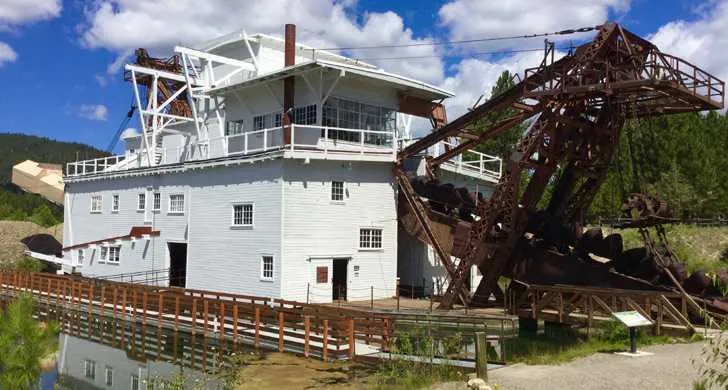
An impressive piece of mining equipment is the centerpiece of this park nestled in the town of Sumpter Valley, at the base of the majestic Elkhorn Mountain Range.
Essentially a ship on dry land, the Sumpter Valley Gold Dredge unearthed the valley in search of gold, leaving piles of debris in its wake.
It’s estimated the dredge dug up more than $4 million in gold during its lifetime. Visiting the Dredge Visitors are welcome aboard the dredge May - October.
Explore the decks yourself or take part in a ranger-led tour; guided tours are held on weekends only. About 1. 5 miles of trails wind through the park wetlands.
Stop at one of several viewing platforms for a glimpse into how nature has reclaimed the valley over the past 50 years.
After visiting the dredge, you may continue on the Elkhorn Drive Scenic Byway to visit other regional attractions.
Background
History & notes
Gold! Gold was discovered in Oregon’s Blue Mountains and nearby Sumpter Valley in 1862. Prospectors—many of whom were veterans of the 1848 California Gold Rush—arrived in droves and scoured the land for the precious metal. By the early 1900s, the “rush” had dwindled to a trickle; all of the easily accessible gold had long been discovered in the mountains and valley. However, gold hunters knew tiny flakes of gold remained buried deep in the valley riverbed. Extracting it by hand would have been too costly and time-consuming, so they enlisted a machine to help: the dredge. Gold dredges come to Sumpter Valley Dredges had been used since antiquity to level off or deepen waterways, and were well-suited for large-scale gold mining operations. A dredge’s high yield and low operating costs made them promising investments for prospectors. Three dredges were built in Sumpter Valley in 1912, 1915 and 1935 respectively. Each had the same basic design: a long row of front buckets that dug through the ground and steadily dumped soil, rocks and other material into the heart of the dredge. Once inside, the earth would pass through a series of sorting mechanisms that strained out the tiny flakes of gold. The leftover dirt and rocks—called tailings — were dumped behind the dredge. Piles of tailings still litter the valley landscape today. The dredges were assembled on the Powder River, but they weren’t bound to it. Their floating design allowed them to strike out perpendicularly into the ancient gold-rich riverbed. As their front buckets cut new channels in the earth, river water would flow forward into the new channels, keeping the dredge afloat and moving forward. The two early dredges were stopped and disassembled by their owners in the mid-1920s, but the 1935 dredge crisscrossed the valley until the early 1950s. Mounting pressure from local citizens and skyrocketing operating costs finally forced the dredge company to permanently stop the machine in August 1954. Weather and neglect took their toll on the wood and steel machine for the following 41 years. The Sumpter Valley Gold Dredge was added to the National Register of Historic Places in 1971. Oregon Parks and Recreation Department purchased the dredge, tailings, and nearby property in 1992-1993 from the Trust for Public Land and private individuals. It opened the dredge to the public in 1994 and began restoring the dredge the following year.
Today
Weather
Forecast is advisory — confirm park hours before you go.
Plan your visit
Nearby
More parks in Baker City
Data quality
Sources
Confidence checks: coordinates · website · image · hours · amenities (and last verified when known).
Confidence score
82/ 100
Oregon State Parks
- official website
- coordinates
- amenities
- hours
- image
- last verified
Confirm hours on the official page before visiting.