
Silver Falls State Park
4.9Google rating(10,523 reviews)Salem · park · 9,058 acres
Camping openOpen for camping year round












Visit
Best for
Essentials
At a glance
- Hours
Open for day use year round · Open for camping year round
On site
Visitor amenities
…stay a while
- Restroomfacility
- Picnic Areafacility
- Parkingfacility
- Shelterfacility
- Showerfacility
- Accessible Featuresfacility
…play & family
- Playgroundfamily
…be in nature
- Vista Pointnature
- Wildlife Viewingnature
- Horse Trailsnature
- Bike Pathnature
- Hiking Trailsnature
…near water
- Fishingwater
- Swimmingwater
…stay overnight
- Campingcamping
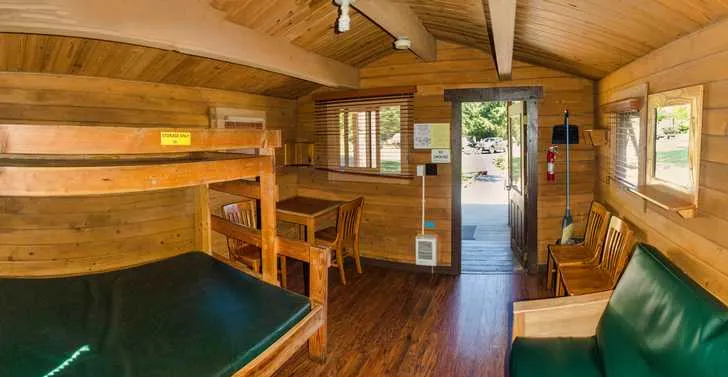
- Cabin / Yurtcamping
- Dump Stationcamping
…culture & learning
- Interpretiveculture
Access
Accessibility
- Wheelchair accessible
- Accessible parking
- Accessible restroom
- Accessible playground
- Accessible trail
- Accessible entrance
Inferred from amenities/description; confirm on official sources.
Browse wheelchair-accessible parksPark size map
Official park boundary from GIS.
On the ground
Trails
Overview
About this park
People call it the “crown jewel” of the Oregon State Parks system, and once you visit, you know why.
Silver Falls State Park is the kind of standout scenic treasure that puts Oregon firmly onto the national—and international—stage.
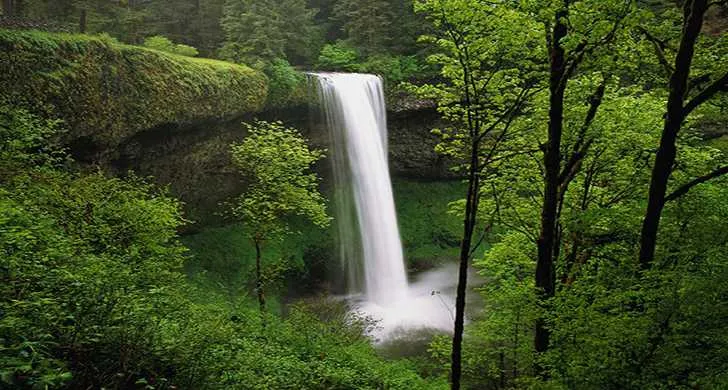
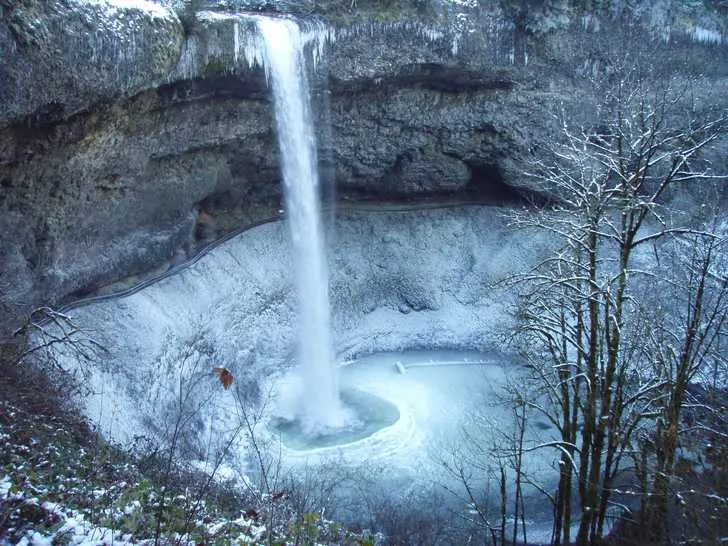
Check out the famous South Falls and see what a 177-foot curtain of water looks like from behind.
Setting
Landscape & setting
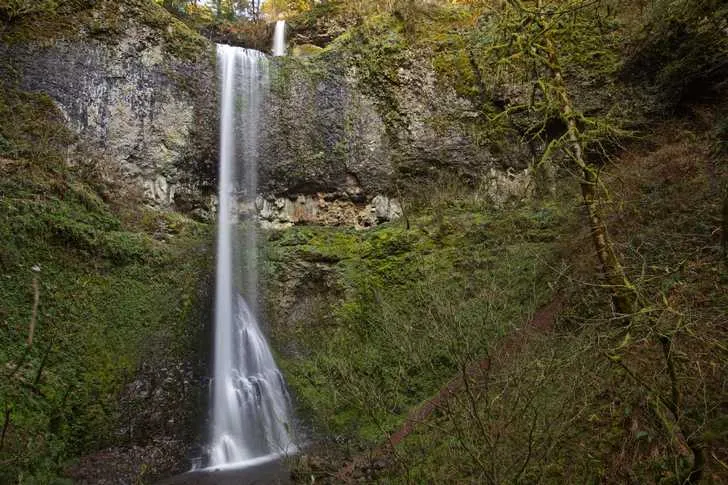
Beachie Creek Fire recovery (September 2021 Update) Waterfalls Where else can you walk behind a waterfall?
Things to do
Things to do
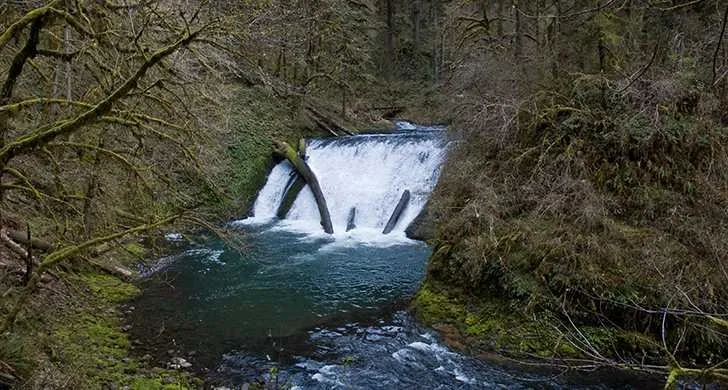
It’s part of the Trail of Ten Falls, a spectacular, nationally recognized hiking trail that weaves through a dense forested landscape.
The trail passes a series of breathtaking waterfalls along a rocky canyon, and descends to a winding creek at the forest floor. This 7.
The Trail of Ten Falls can be accessed through several trailheads, including South Falls District, North Falls District, Winter Falls Trailhead and the North Falls Trailhead.
The one-mile trail is highly accessible with a width of 6 or more feet of compacted surface. The trail includes a viewpoint of the North Falls.
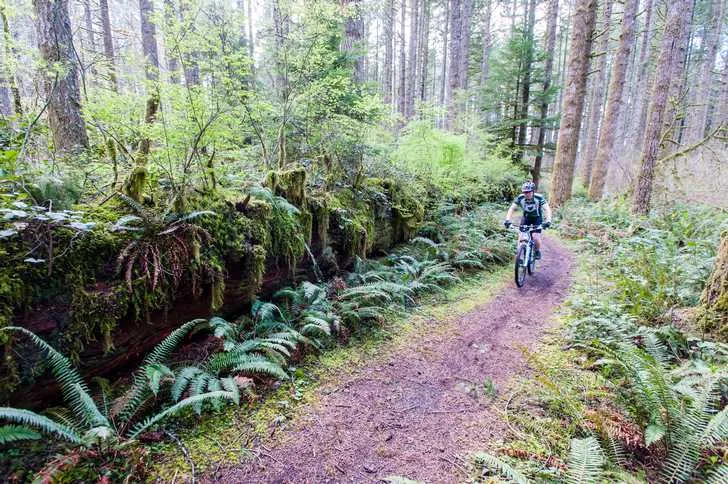
Boots, bikes, paws, hooves The park offers more than 35 miles of backcountry trails for mountain biking, hiking or horseback riding (see guided ride info below).
Pet policy
Dogs & pets
For everyone’s safety— absolutely no pets allowed on the Canyon, Winter Falls and the Maple Ridge Trails.
On site
Amenities & facilities
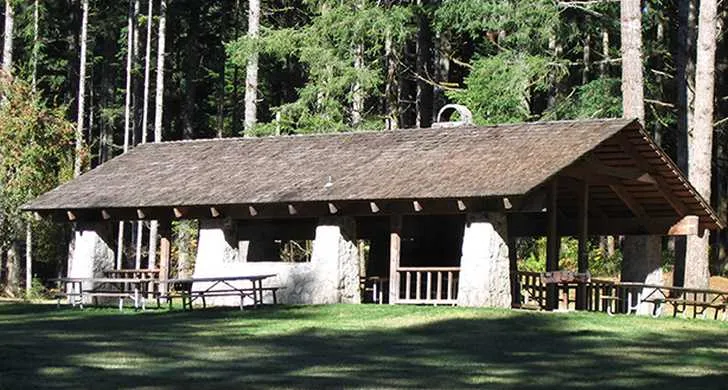
Bears and cougars live in the more remote park areas. Daytime activities The South Falls day-use area has spacious lawns, barbecue stands, picnic shelters, tables, a playground,
Background
History & notes
Silver Falls State Park opened July 23, 1933. But its history began long before. Earliest Inhabitants The Kalapuya and Molalla, whose ancestors came to the Willamette Valley about 14,000 years ago, were the native people in the Silver Falls area when settlers arrived as early as 1812. Indigenous people numbered about 15,000 in the Willamette Valley prior to settlement, but populations began to decline with the introduction of foreign diseases, for which they had no immunity. By the early 1840s, the indigenous population dropped to about 600, and newcomers were arriving in large numbers. By 1850 hundreds of settlers lived in and around the Silver Falls Area before completely displacing all the native people in western Oregon when the government relocated them to reservations in 1854. Homesteading The first land homesteaded in Silver Falls was in 1883 next to South Falls. The next homestead comprised the area that includes South Falls Lodge, nearby buildings, and the park’s main parking lot. On this same land, the town of Silver Falls City was platted in 1888. Never more than several dozen families at a time resided in it. Still, it was the de facto capital of Silver Falls, an area with a peak of more than 200 residents, and it lasted for over 40 years. In its time, it had three general stores, an eight-room hotel, church, dance hall, tavern, granary, blacksmith shop, houses with barns and other outbuildings, and several sawmills. A one-room school was located 1 1/2 miles south. Building a Park The Great Depression struck in 1929, and Oregon’s most important industry—timber— tanked. The whole state's economy, and Silver Falls along with it, was devastated. U.S. government programs for mitigating the effects of the depression also made the park the great place it is today. One program, the Civilian Conservation Corps, put young unemployed men to work constructing buildings, trails, bridges, retaining walls, and other park infrastructure—most of which are on the National Register of Historic Places. Through the Silver Falls Recreational Demonstration Area—a federal land acquisition, development, and transfer program— more than 5,000 acres were added to the park by 1948. “Founding Fathers” Two people stand out in the history of the park. June Drake, a Silverton photographer, conducted a long, unrelenting campaign to have the waterfalls and their surrounding area enclosed in a park. Samuel H. Boardman, the first superintendent of Oregon state parks, took a special interest in Silver Falls while expanding and developing the state’s park system. Drake earned the honorary title of the Father of Silver Falls State Park and Boardman the title of the Father of Oregon State Parks. Silver Falls Today Park staff, with support from volunteers, maintains a park of over 9,000 acres that annually attract well over a million visitors. For more information please visit the Friends of Silver Falls website: friendsofsilverfalls.net
Today
Weather
Forecast is advisory — confirm park hours before you go.
Plan your visit
Nearby
More parks in Salem
Data quality
Sources
Confidence checks: coordinates · website · image · hours · amenities (and last verified when known).
Confidence score
85/ 100
Oregon State Parks
- official website
- coordinates
- amenities
- hours
- image
- last verified
Confirm hours on the official page before visiting.